
African talent / Where the minutes are
Finland, not Denmark, gives African players the most minutes
Nordsjælland is the famous route, but across five seasons of Nordic league football Finland’s Veikkausliiga gave players with African nationalities the biggest share of playing time, and it still leads when its biggest contributor is removed.
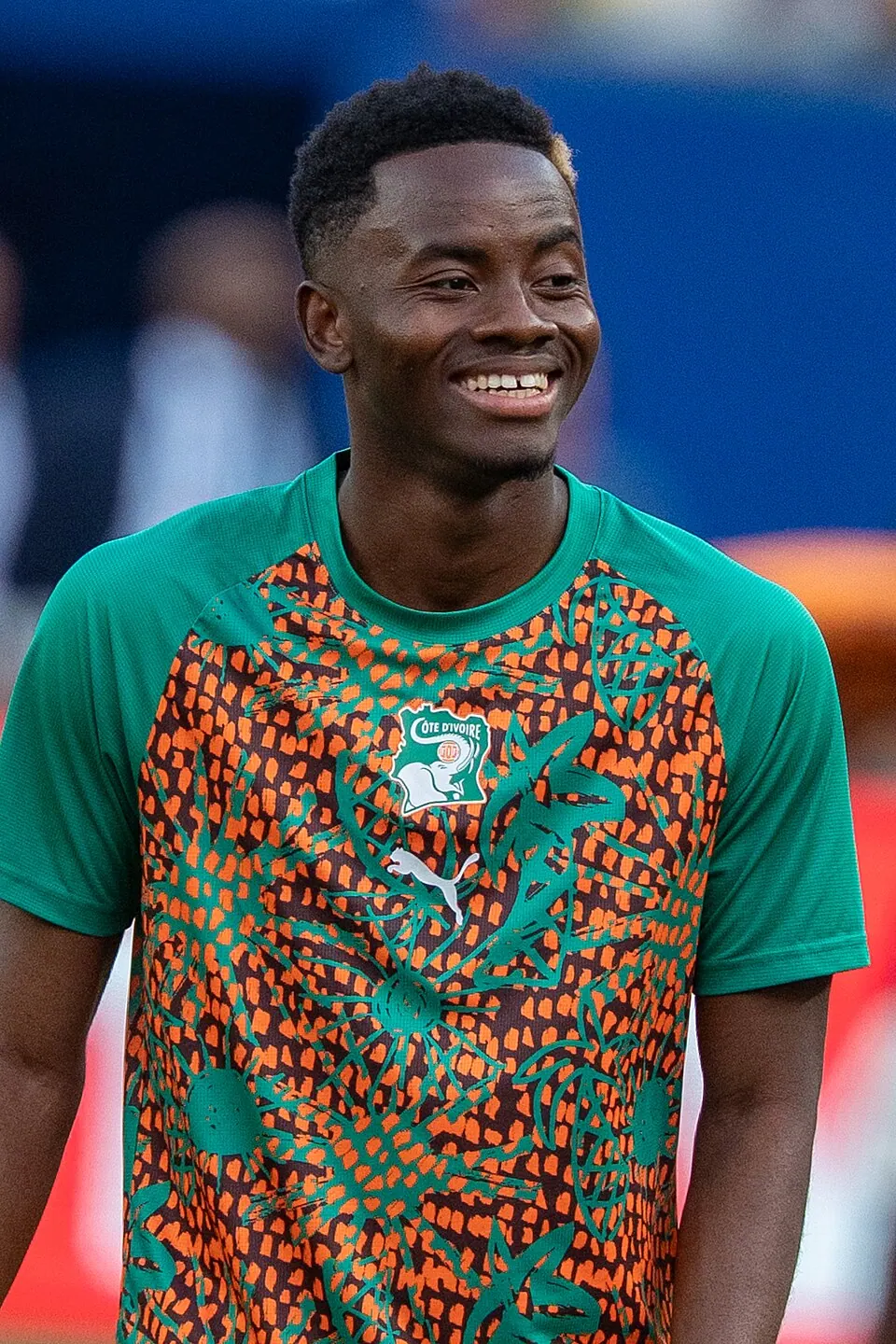
Photo: Bryan Berlin / Wikimedia Commons, CC BY-SA 4.0.
Scope. League matches only: the Danish Superliga, 2021/22-2025/26, and the Allsvenskan, Eliteserien and Veikkausliiga, 2021-2025. “African players” means players whose first nationality is African. Cup and European matches are excluded. How we did this.
In this article
When a scout says “look north” for African talent, they usually mean Nordsjælland. The club’s route to Europe’s biggest leagues runs through players such as Simon Adingra and Mohammed Kudus, and it has made Farum the shorthand for the whole region.
The minutes point somewhere else. Across five completed seasons, players with an African first nationality took 13.4% of the minutes in Finland’s Veikkausliiga, against 9.1% in Denmark, 8.8% in Sweden and 7.6% in Norway. Ghanaians played the most minutes of any African nationality across the four leagues, ahead of Nigerians.
The obvious objection is that one committed club could be doing all the work. We tested that, and it does not hold.
Take out the biggest club and Finland still leads
For every league and season, we removed the club that gave African players the most minutes, together with all of its own minutes, and recalculated. Finland’s share falls from 13.4% to 12.3%. It is still first.
The club removed in Finland changed almost every year: FC Honka (2021), IFK Mariehamn (2022), KuPS (2023) and Inter Turku (2024 and 2025). No single team carries the league. African players also appeared at every Finnish club in every season, all 60 club seasons, though some of those appearances were brief.
Denmark and Sweden swap places under the same test, at 7.8% and 7.8%. Their pooled shares are too close to call one more open than the other.
Sources: [1]
Nordsjælland matters, but most of Denmark’s African-player minutes are elsewhere
Nordsjælland was Denmark’s largest contributor in four of the five seasons. Even so, in 2025/26 it accounted for 22.0% of the Danish Superliga’s African-player minutes, so 78.0% were played at other clubs. Inside Farum, African players took 23.3% of the team’s minutes.
Those two numbers answer different questions. The first tells a scout how much of the market one club represents; the second tells a player how much of one team’s playing time goes to African players. The largest Danish contributor in 2024/25 was Viborg, not Nordsjælland.
Sources: [1]
Older players got more of the minutes
Age changes the picture as much as country. Among under-21 player-seasons, 34.2% reached 900 league minutes, the equivalent of ten full matches. For players aged 25-29, it was 55.7%; for those 30 and over, 53.6%.
Playing time extends beyond the youngest group
Share of player seasons reaching 900 league minutes
Under 21
34.2%
67 of 196 player seasons
21-24
44.6%
146 of 327 player seasons
25-29
55.7%
128 of 230 player seasons
30+
53.6%
37 of 69 player seasons
That is not proof that an experienced newcomer walks into a team. Ages are measured during the season, not on arrival, and the older groups include players who earned a place years earlier and stayed. But it is a warning to any academy that treats the famous young export as the normal outcome.
Sources: [1]
What it means for recruiters, agents and families
For a recruitment department, the finding widens the search: Finnish clubs deserve the same attention as the famous Danish route. For an agent or a family, it narrows the next question. A league’s openness says nothing about the role at a particular club. Ask which position is available, who already plays there, and how many minutes the last player in that role received.
Playing time is not development. To show that a league improves players, we would need comparable performances before and after each move, and the careers of those who struggled as well as those who were sold. Part 2 turns from minutes to output, and to how a single filter can change who a scout sees first.
Sources: [1]
Explore the numbers
Open the tables for club and player comparisons, or read how the data was selected.
Inspect club opportunity in the latest completed seasons
The five clubs giving African players the most recorded minutes in each league’s latest completed season. One percentage shows their share of the club’s minutes; the other shows the club’s share of all African players’ minutes in that league.
| Club | African minutes | Club minutes share | League African minutes share |
|---|---|---|---|
| Degerfors | 5,297 | 17.9% | 11.6% |
| Halmstad | 5,137 | 17.3% | 11.3% |
| Värnamo | 4,889 | 16.6% | 10.7% |
| Norrköping | 4,617 | 15.6% | 10.1% |
| Brommapojkarna | 4,047 | 13.6% | 8.9% |
| Club | African minutes | Club minutes share | League African minutes share |
|---|---|---|---|
| Nordsjælland | 7,329 | 23.3% | 22.0% |
| Viborg | 3,975 | 12.5% | 11.9% |
| Odense | 3,891 | 12.3% | 11.7% |
| Midtjylland | 3,449 | 10.9% | 10.3% |
| AGF | 2,797 | 8.8% | 8.4% |
| Club | African minutes | Club minutes share | League African minutes share |
|---|---|---|---|
| Haugesund | 9,406 | 31.8% | 22.9% |
| Fredrikstad | 6,400 | 21.5% | 15.6% |
| Sarpsborg 08 | 5,312 | 17.9% | 12.9% |
| Kristiansund | 4,668 | 15.8% | 11.4% |
| Molde | 3,510 | 11.8% | 8.6% |
| Club | African minutes | Club minutes share | League African minutes share |
|---|---|---|---|
| Inter Turku | 9,319 | 29.5% | 16.7% |
| SJK | 7,560 | 23.9% | 13.5% |
| KuPS | 6,664 | 21.1% | 11.9% |
| VPS | 5,621 | 21.1% | 10.1% |
| FF Jaro | 5,444 | 20.4% | 9.7% |
About the data
Performance figures cover domestic top-flight league matches in Denmark, Sweden, Norway, and Finland. Cup matches and European club competitions are excluded. Data comes from FBref through Fjordata, our Nordic football dashboard, checked on 14 October 2026.
- Allsvenskan: completed seasons 2021 to 2025.
- Danish Superliga: completed seasons 2021/2022 to 2025/2026.
- Eliteserien: completed seasons 2021 to 2025.
- Veikkausliiga: completed seasons 2021 to 2025.
The current seasons, 2026 and 2026/2027, are shown separately where included. Iceland is left out because equivalent performance data is unavailable. African players means players whose first nationality in the source is an African country; it does not describe ethnicity or where they grew up.
Minutes shares use all recorded player minutes. The age comparison uses a player’s recorded season age, rather than age on arrival, and counts each league season separately. Players can appear in more than one season. Five names have inconsistent birth-year records: Adama Fofana, Fallou Ndiaye, Ibrahim Cissé, Ibrahim Osman, Maissa Fall. Their minutes remain in the league totals, but their uncertain records are excluded from age comparisons and named rankings.
Transfer records come from Transfermarkt through Fjordata, checked on 12 October 2026. Their history is shorter than the performance history. The country charts include identified moves outside the loan categories, remove repeated records, and separate “without a club” from country destinations. Vejle’s original announcement supplies Ransford Amoo’s missing previous club and country. A move between covered leagues can appear from both sides. A club’s country does not identify its division.
Official club announcements support the selected career stories, including loans. These examples are not a complete list of everyone who moved. The data cannot measure how much a Nordic move improved a career or predict an individual’s destination.
Download the analysis data
CSV files for readers who want to reuse or check the figures.