
African talent / Nordic clubs and the Africa Cup of Nations
Africa’s top-ranked teams rarely call up players from Nordic clubs
Caleb Yirenkyi went from Nordsjælland to the World Cup with Ghana, but most players in his position were not called up. At five tournaments since January 2022, Africa’s ten highest-ranked teams called up 15 of the 143 players from their countries who had played regularly in the Nordic top flights, and six of 125 once Tunisia is left out. The other national teams called up 16 of 91.
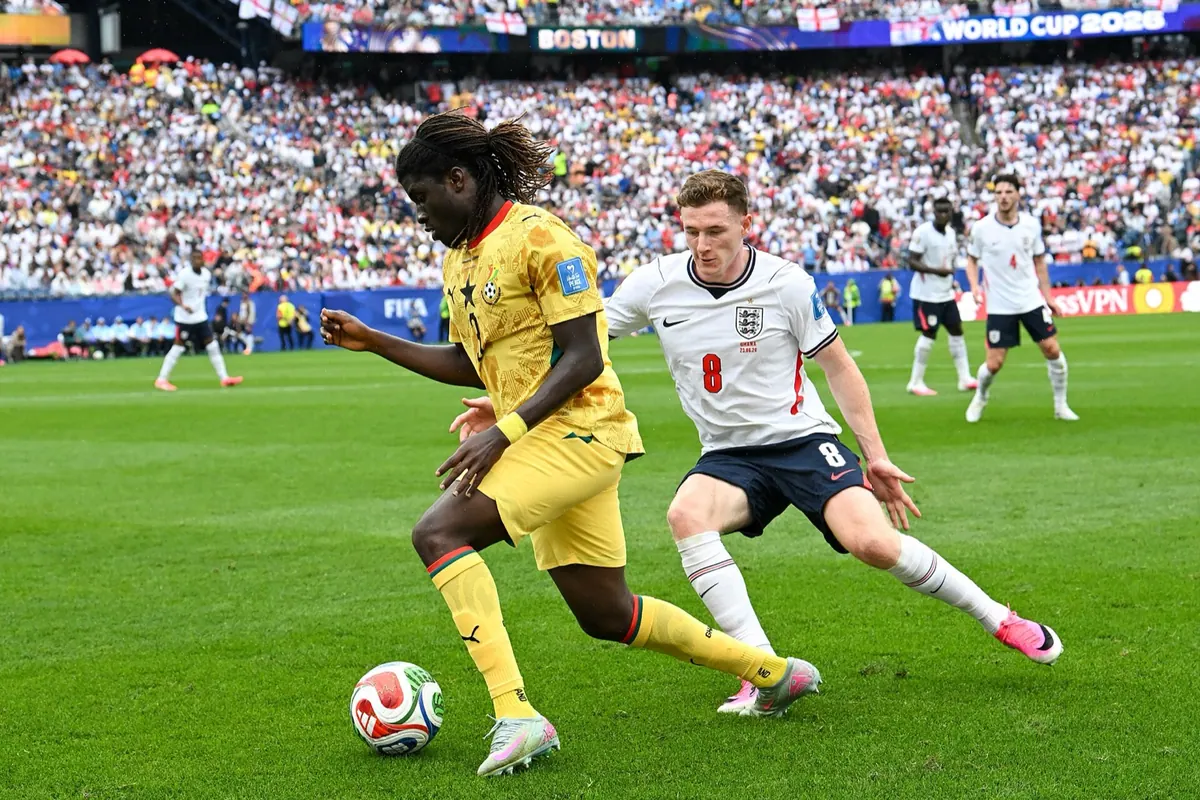
Photo: YantsImages / Wikimedia Commons, CC BY-SA 4.0.
Scope. African players in the Danish Superliga, Allsvenskan, Eliteserien, and Veikkausliiga, compared with the squads Africa’s national teams took to five tournaments from January 2022 to June 2026, with each team placed by the FIFA ranking published before the tournament. How we did this.
In this article
Caleb Yirenkyi played all 90 minutes of Ghana’s 0-0 draw with England at the 2026 World Cup, in midfield against Premier League players, after a season in which he played 2,610 league minutes for Nordsjælland at 19. He was one of two called up from the 18 Ghanaians who had played at least 900 minutes, roughly ten full matches, in the Danish, Swedish, Norwegian, or Finnish top flights in the season before the tournament. We call these players Nordic regulars.
Key findings
- Africa’s ten highest-ranked teams called up about one in ten of their Nordic regulars, against nearly one in five for the other African teams.
- Among the top ten, Tunisia and Mali called up half of their Nordic regulars, while Senegal, Nigeria, and Côte d’Ivoire called up none.
- The supply has held up: the four Nordic top flights had between 154 and 182 African players in every year from 2021 to 2026.
Ghana was not alone. Across the 2021, 2023, and 2025 Africa Cups of Nations and the 2022 and 2026 World Cups, Africa’s national teams called up 31 of the 234 Nordic regulars from their countries, about one in eight. As a group, the teams with the highest FIFA rankings called up the smallest share of theirs.
Ghana had the most Nordic regulars and called up four
The second Ghanaian, Kojo Peprah Oppong, had already left the Nordic leagues. He played 1,201 league minutes for IFK Norrköping in 2025 at 21 and joined Nice before the World Cup, where he came on in the 87th minute against England.
Over the four tournaments Ghana reached, it called up four of its 71 Nordic regulars. Ghana was among Africa’s ten highest-ranked teams only before the 2021 Africa Cup, so most of its regulars sit with the other teams in the comparison below.
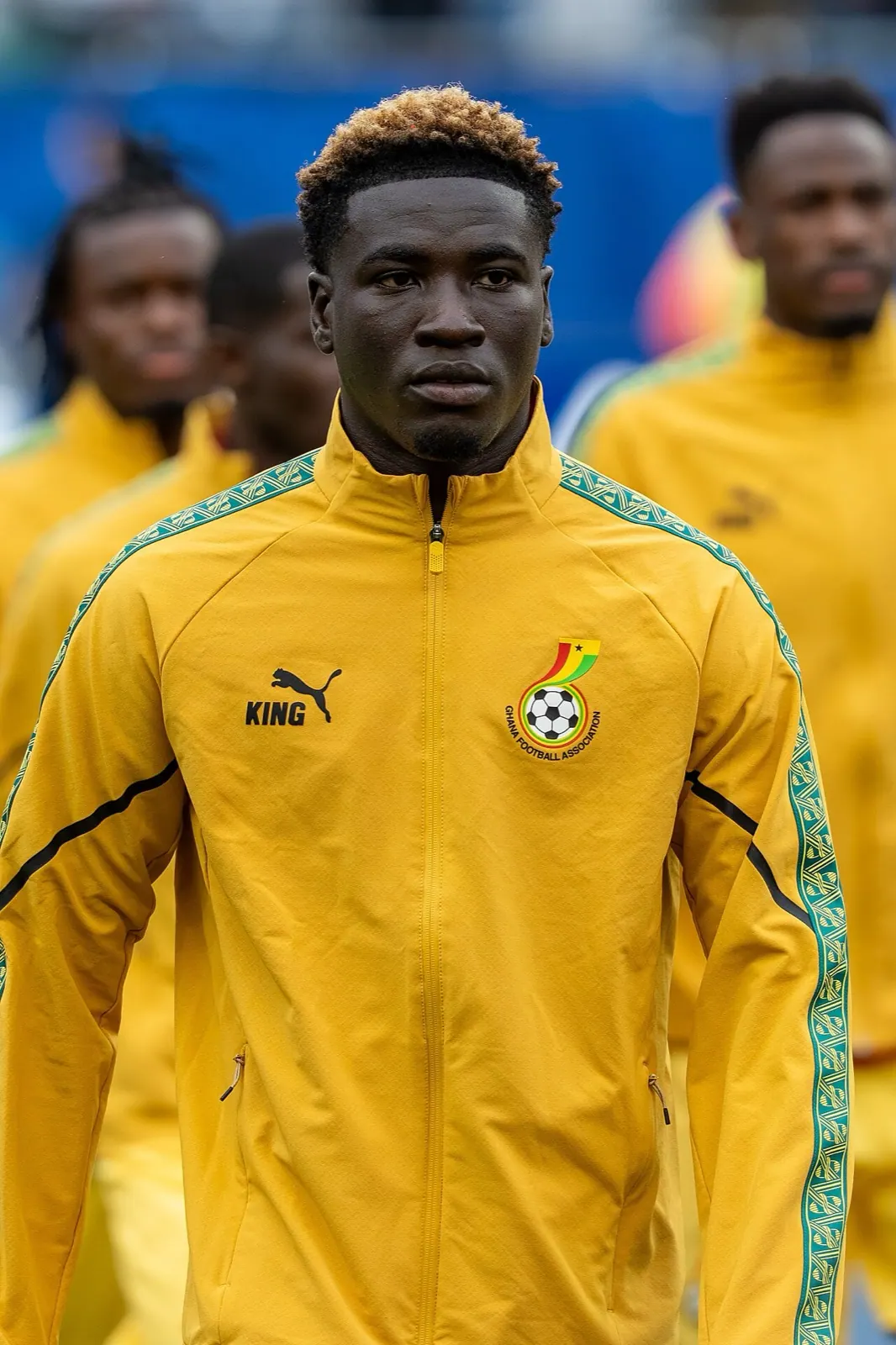
Photo: Bryan Berlin / Wikimedia Commons, CC BY-SA 4.0.
Africa’s ten highest-ranked teams called up the smallest share
The table compares each national team’s squads with its Nordic regulars, tournament by tournament, from the most call-ups to the fewest. A framed cell marks a team that was one of Africa’s ten highest-ranked teams in the FIFA ranking published before that tournament.
| # | National team | Called up | Nordic regulars | Share called up | AFCON 2021Jan 2022 | WC 2022Nov 2022 | AFCON 2023Jan 2024 | AFCON 2025Dec 2025 | WC 2026Jun 2026 |
|---|---|---|---|---|---|---|---|---|---|
| 1 |  Tunisia | 9 | 18 | 50% | 0/1 | 2/3 | 2/4 | 2/5 | 3/5 |
| 2 |  The Gambia | 4 | 9 | 44% | 1/4 | 3/5 | |||
| 2 |  Ghana | 4 | 71 | 6% | 1/19 | 0/14 | 1/20 | 2/18 | |
| 4 |  Mali | 3 | 6 | 50% | 2/3 | 0/1 | 1/2 | ||
| 5 |  Sierra Leone | 2 | 2 | 100% | 2/2 | ||||
| 5 |  Zambia | 2 | 2 | 100% | 2/2 | ||||
| 5 |  Guinea | 2 | 3 | 67% | 2/2 | 0/1 | |||
| 5 |  South Africa | 2 | 11 | 18% | 0/5 | 1/3 | 1/3 | ||
| 9 |  Burkina Faso | 1 | 3 | 33% | 1/1 | 0/2 | |||
| 9 |  Cape Verde | 1 | 5 | 20% | 0/2 | 1/3 | |||
| 9 |  Cameroon | 1 | 15 | 7% | 0/4 | 0/5 | 1/2 | 0/4 | |
| 12 |  Nigeria | 0 | 33 | 0% | 0/16 | 0/8 | 0/9 | ||
| 12 |  Côte d’Ivoire | 0 | 26 | 0% | 0/5 | 0/6 | 0/8 | 0/7 | |
| 12 |  Senegal | 0 | 21 | 0% | 0/4 | 0/2 | 0/3 | 0/6 | 0/6 |
| 12 |  Morocco | 0 | 3 | 0% | 0/1 | 0/2 | |||
| 12 |  Algeria | 0 | 1 | 0% | 0/1 | ||||
| 12 |  Angola | 0 | 1 | 0% | 0/1 | ||||
| 12 |  Gabon | 0 | 1 | 0% | 0/1 | ||||
| 12 |  Mozambique | 0 | 1 | 0% | 0/1 | ||||
| 12 |  Sudan | 0 | 1 | 0% | 0/1 | ||||
| 12 |  Uganda | 0 | 1 | 0% | 0/1 | ||||
| All 21 nations | 31 | 234 | 13% | 8/62 | 2/26 | 10/62 | 4/41 | 7/43 |
2/5 Framed: one of Africa’s ten highest-ranked teams in the FIFA ranking published before that tournament.
Share called up: 0% none 20% up to a quarter 33% under half 50% half or more. A blank cell: the team was not at that tournament or had no Nordic regular.
Tunisia and Mali head the table, and each called up half of its Nordic regulars. Below them, Senegal, Nigeria, and Côte d’Ivoire, all in Africa’s top ten before every tournament they reached, called up none of their 21, 33, and 26 Nordic regulars. Without Tunisia, the top ten called up six of 125, about one in twenty.
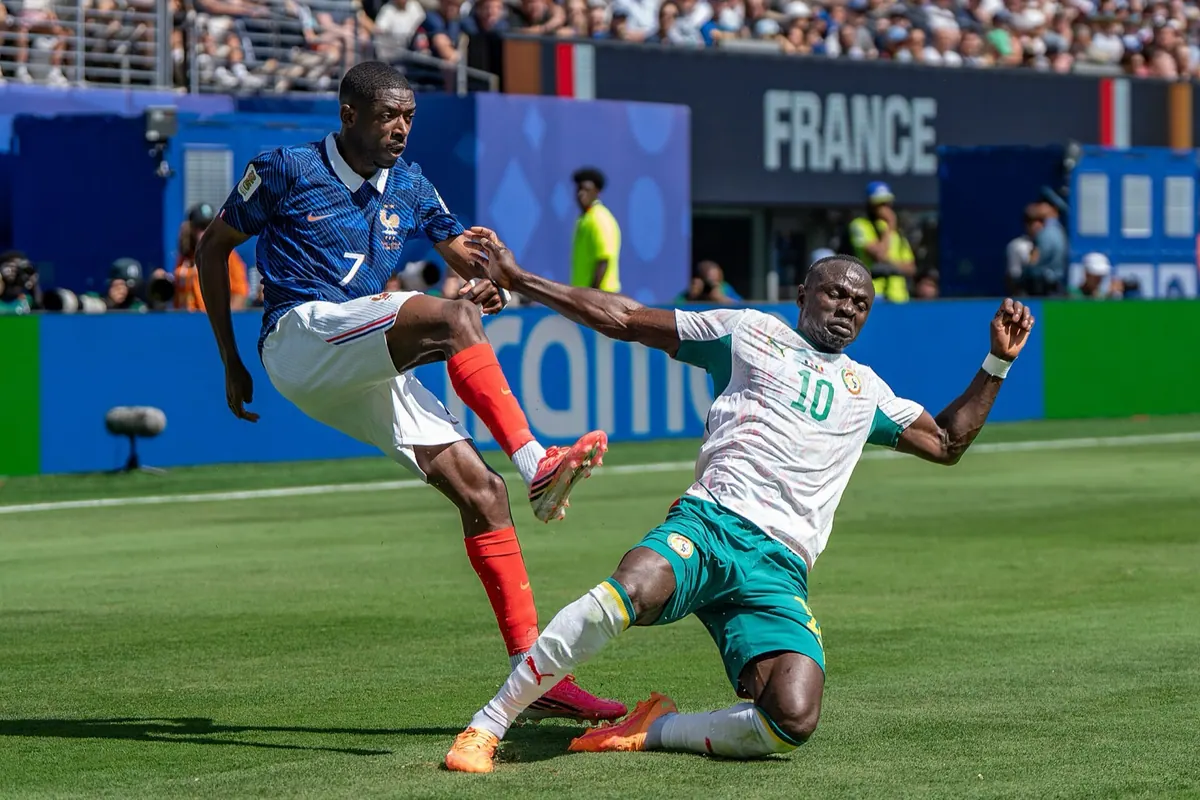
Photo: Bryan Berlin / Wikimedia Commons, CC BY-SA 4.0.
Senegal won the 2025 Africa Cup in Rabat in January 2026, beating Morocco 1-0 after extra time, without any of its six Nordic regulars. Strength in depth may explain part of the pattern. Of the top ten’s squad places, 40% went to players at clubs in Europe’s big five leagues (England, Spain, Germany, Italy, and France), compared with 10% for the other teams, and we cannot say how much of the difference in call-up rates that accounts for.
Neither finalist in Abidjan called up a Nordic regular
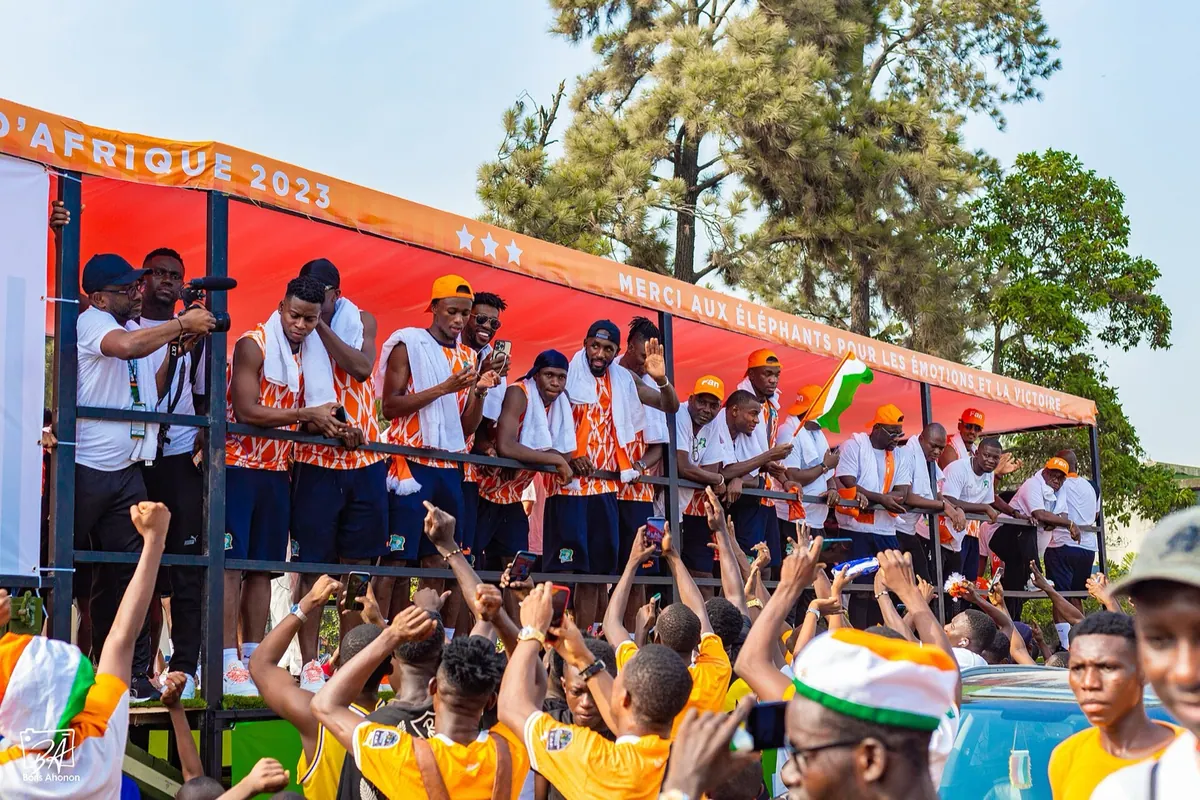
Photo: BorisAhonon / Wikimedia Commons, CC0 1.0.
The 2023 Africa Cup, played in Côte d’Ivoire in January and February 2024, followed the same pattern at the top. The hosts beat Nigeria 2-1 in the final in Abidjan, with Sébastien Haller scoring the winner in the 81st minute, and neither finalist called up any of its Nordic regulars: none of Côte d’Ivoire’s six and none of Nigeria’s eight. Both squads leaned on Europe’s big five instead, with 12 of Côte d’Ivoire’s 27 players and nine of Nigeria’s 25 at big-five clubs.
Tunisia called up half of its Nordic regulars
Tunisia called up nine of its 18 Nordic regulars across the five tournaments, and, as Part 1 found, no African team named more Nordic-based players in its squads. At the 2022 World Cup in Qatar, Anis Ben Slimane of Brøndby started and Issam Jebali of OB came on as Tunisia beat France 1-0 through Wahbi Khazri’s goal in its last group match.
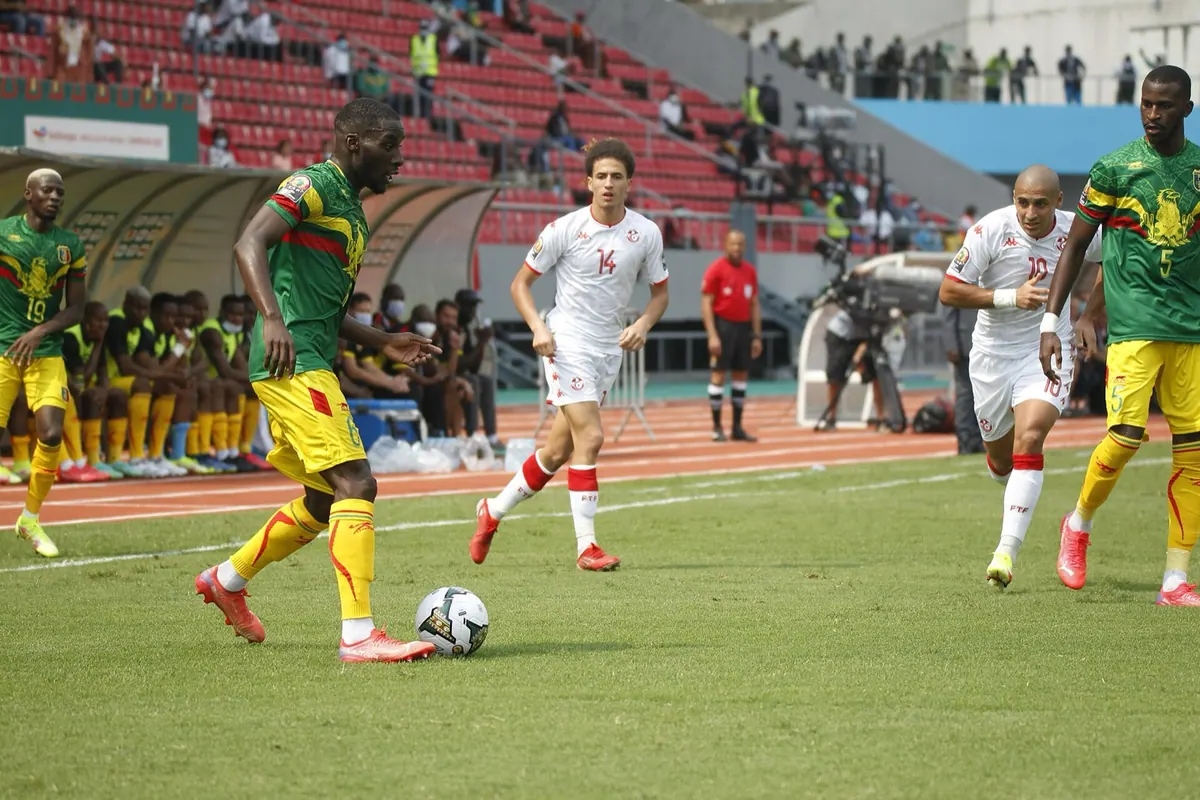
Photo: Happiraphael / Wikimedia Commons, CC BY-SA 4.0.
Nordic-based players have also decided matches at the Africa Cup. When Mali beat Tunisia 1-0 in Limbe at the 2021 edition, in the match the referee Janny Sikazwe ended early, Ibrahima Koné of Sarpsborg 08 scored the penalty and Ben Slimane came on for Tunisia in the second half. Mali called up two of its three Nordic regulars for that tournament.
Elias Achouri was at FC Copenhagen when Tunisia called him up for the 2023 and 2025 Africa Cups and the 2026 World Cup. He played 1,315 Danish Superliga minutes in 2025/26 before San Diego FC signed him in July 2026. Moutaz Neffati, who played 2,318 minutes for IFK Norrköping in 2025 at 20, was the second Nordic-based player in Tunisia’s World Cup squad.
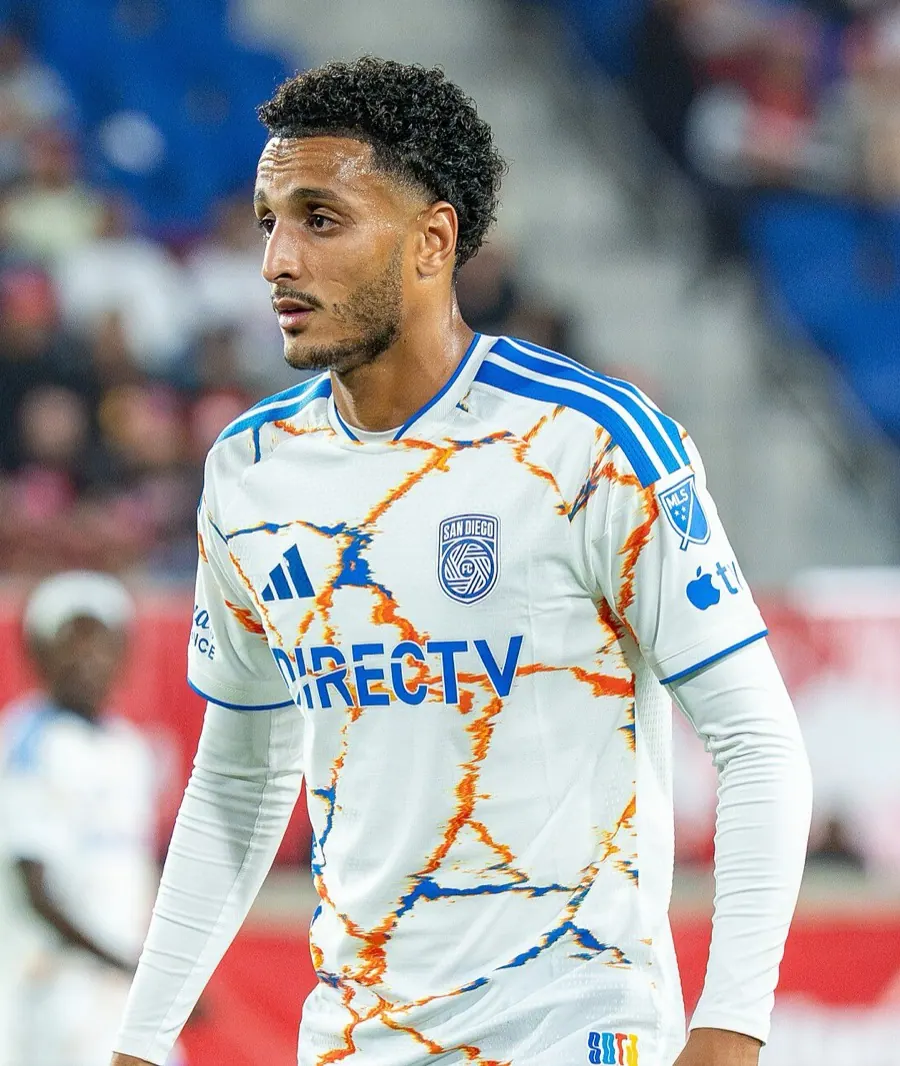
Photo: Bryan Berlin / Wikimedia Commons, CC BY-SA 4.0.
Smaller nations called up their few regulars more often
As a group, the teams outside the top ten called up a larger share, 16 of 91, and four small nations, The Gambia, Sierra Leone, Zambia, and Guinea, accounted for 10 of those call-ups from only 16 regulars. Sierra Leone called up both of its Nordic regulars for the 2021 Africa Cup and took five players from Nordic clubs in all, Iceland included. Zambia called up both of its regulars in 2023, although two players are too few to read much into. The Gambia called up four of nine at the two Africa Cups it reached; at the 2021 edition, its first, it reached the quarter-finals with James Gomez of Horsens in the side.
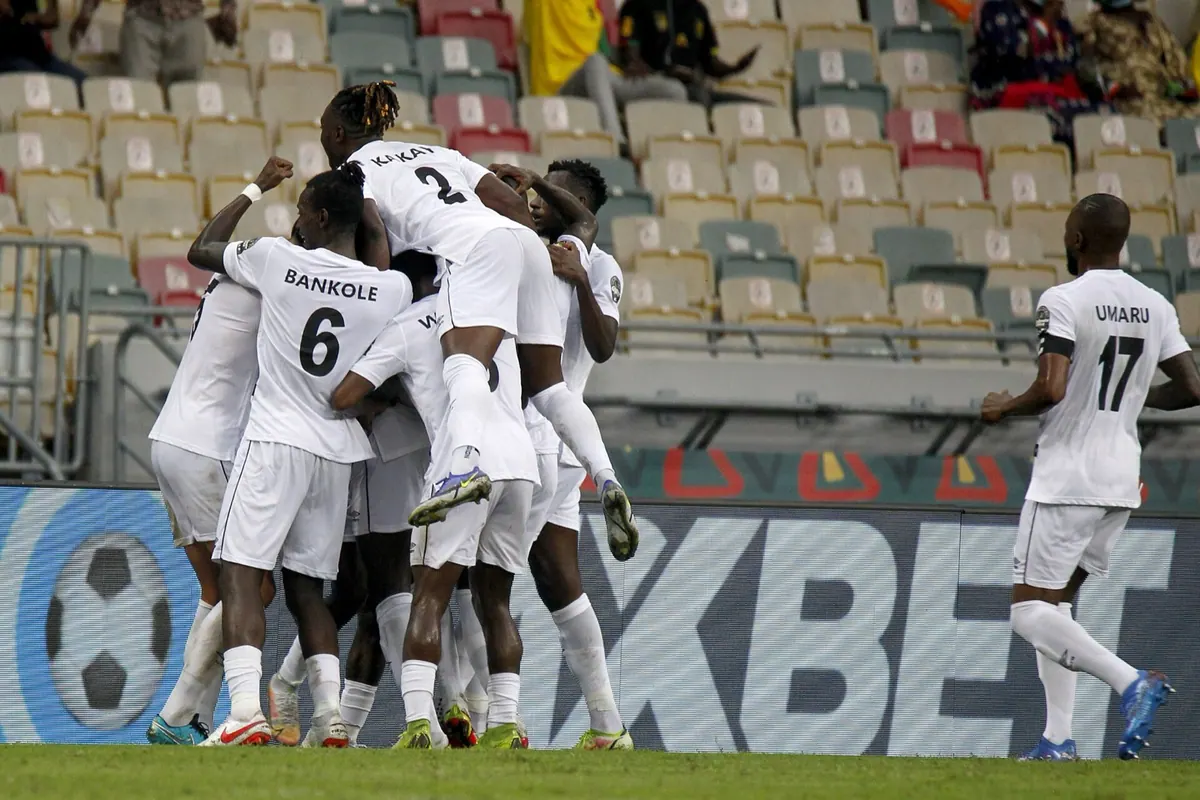
Photo: Happiraphael / Wikimedia Commons, CC BY-SA 4.0.
The supply of African players has held up
A shrinking pool could explain the low call-up rate, but the pool has not shrunk. The four Nordic top flights had between 154 and 182 African players in every year since 2021, and in 2026 each league was within three players of its 2021 number apart from Finland’s Veikkausliiga, which increased the most, from 42 to 50. The 2026 counts for Sweden, Norway, and Denmark may still rise, because those seasons were still being played when we wrote this.
The number of Nordic regulars from the nations at the 2025 Africa Cup decreased to 41 from 62 two years earlier, mostly because Ghana, which had 20 of the 62 in 2023, did not qualify.
What a squad announcement cannot show
A squad announcement shows who was called up, not who was considered. A player may have been injured, out of favour, committed to another national team, or behind stronger candidates in his position. A player whose name is spelt differently in a squad announcement may have been missed, so the 31 call-ups may be an undercount. Younger regulars were called up somewhat more often than older ones, and forwards less often than other positions, but these groups are too small to rely on.
Even so, the pattern holds across five tournaments. A season of regular football in Denmark, Sweden, Norway, or Finland usually brought no call-up from Africa’s highest-ranked teams, and squad announcements do not say why.
What this means
For recruitment staff and analysts: call-ups are a poor guide to which African players are playing regularly in the Nordic leagues, because most regulars were not selected. League minutes show which players had regular first-team football.
For national associations and their scouts: we counted 234 Nordic regulars from the nations at these five tournaments and have their league minutes for each season, so the pool can be followed between international breaks rather than only on the day a squad is named.
For players and agents: call-up rates differed sharply by national team, and Africa’s highest-ranked teams, apart from Tunisia and Mali, called up very few Nordic regulars.
For supporters and journalists: a squad announcement is best read alongside league minutes, as Ghana’s World Cup squad shows.
How we did this
Regulars. A regular is a player with at least 900 league minutes, summed over clubs, in the last season completed before the tournament in the Danish Superliga, Allsvenskan, Eliteserien, or Veikkausliiga, from a nation at that tournament. A regular counts as called up when his full name and nation match an entry in that tournament’s squad. The squad lists and their checks are described in Part 1.
League minutes. They come from Fjordata for the Danish Superliga, Allsvenskan, Eliteserien, and Veikkausliiga; the men’s Icelandic league has no player records. A player is matched to a league record on full name and nation, so a spelling variant is missed and every matched count could be higher. Nationality is the first one shown in Fjordata, which can differ from Transfermarkt’s for a player with two. Our minutes data start in 2021, so the windows before the first two tournaments are only partly covered.